EARTHWORKS GARDEN
Living materials lab • ecological studio • shared learning space
We envision EarthWorks as a space to practice commoning as a refusal of capitalist enclosures and forms of extraction that shape our neighborhoods. It responds to compounding ecological and social crises with an invitation, the space, and the resources to practice abolitionist, ecofeminist futures. It is important because it prefigures a future in which we can reclaim the capacity to solve our own problems and teaches others to do the same. In the end, our goal is to practice inhabiting those futures today and make those speculations irresistible, plausible, and stunningly beautiful.
At EarthWorks, we’ll grow plants we can eat and transform into botanical dyes, pigments, textiles and structures; we’ll test artful infrastructures that sustain those activities, like collecting and storing wind energy, harvesting and moving water, remediating heavy metals from soil and collaborating to care for the space. We will build architectures and tools that support learning, protect our resources, and allow us to transform materials into new forms from renewable local resources like straw, hemp, mass timber, and clay, and support decision-making. We’ll pursue these projects in public and with publics, rendering this project a site of learning through and about ecosystems, both relational and environmental.
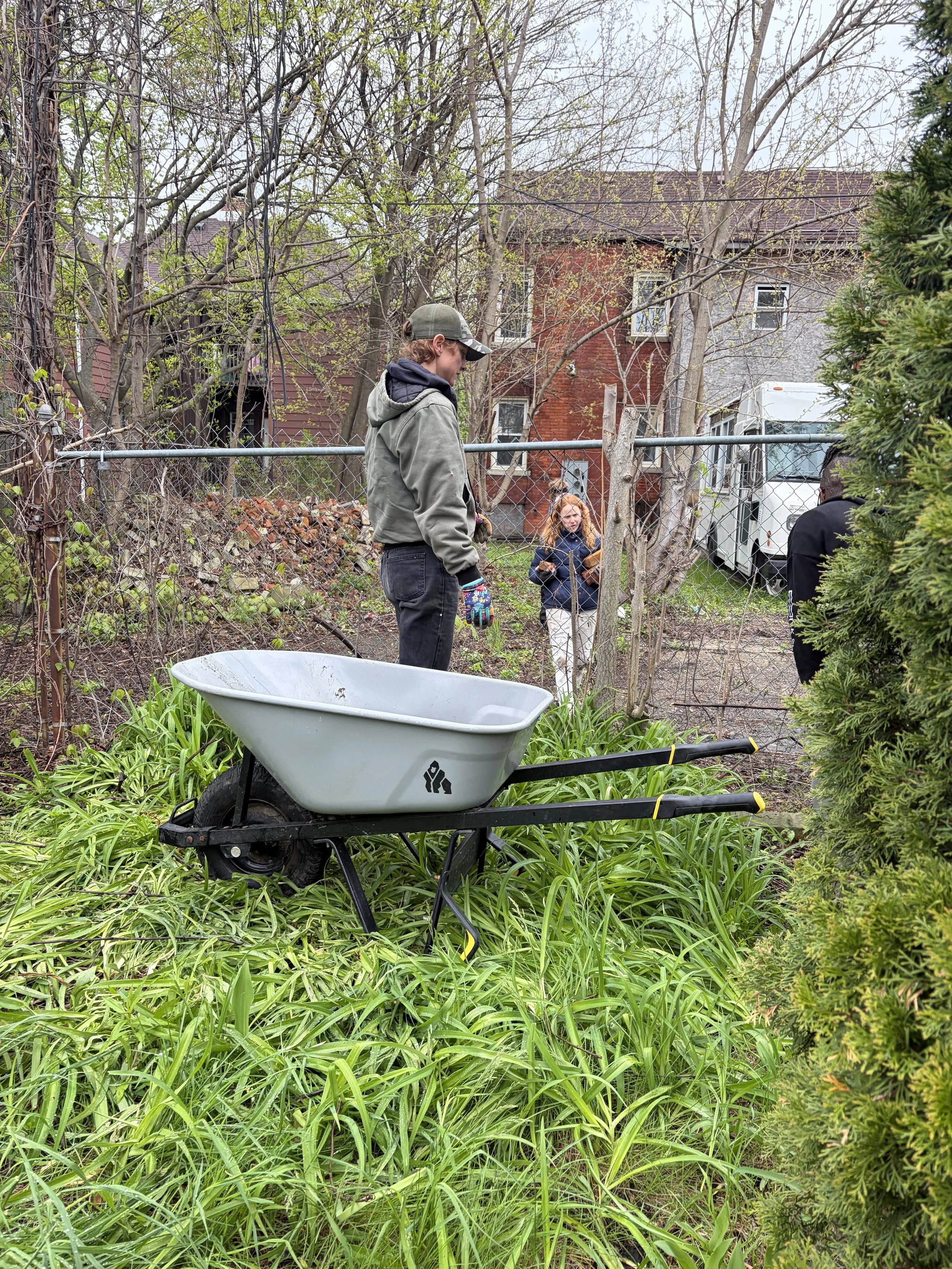
EarthWorks is a garden and experimental site rooted in Detroit’s North End. It is a place for growing plants, studying land systems, and working with ecological materials—soil, water, wind, and plant matter—as active collaborators in making and learning.
Rather than separating art, agriculture, and infrastructure, EarthWorks treats them as overlapping practices of care and experimentation.
About the Project
EarthWorks is a living materials lab where plants become dye, pigment, fiber, food, and form.
It is also an evolving ecological infrastructure site—testing small-scale systems for:
rainwater collection and movement
wind energy capture
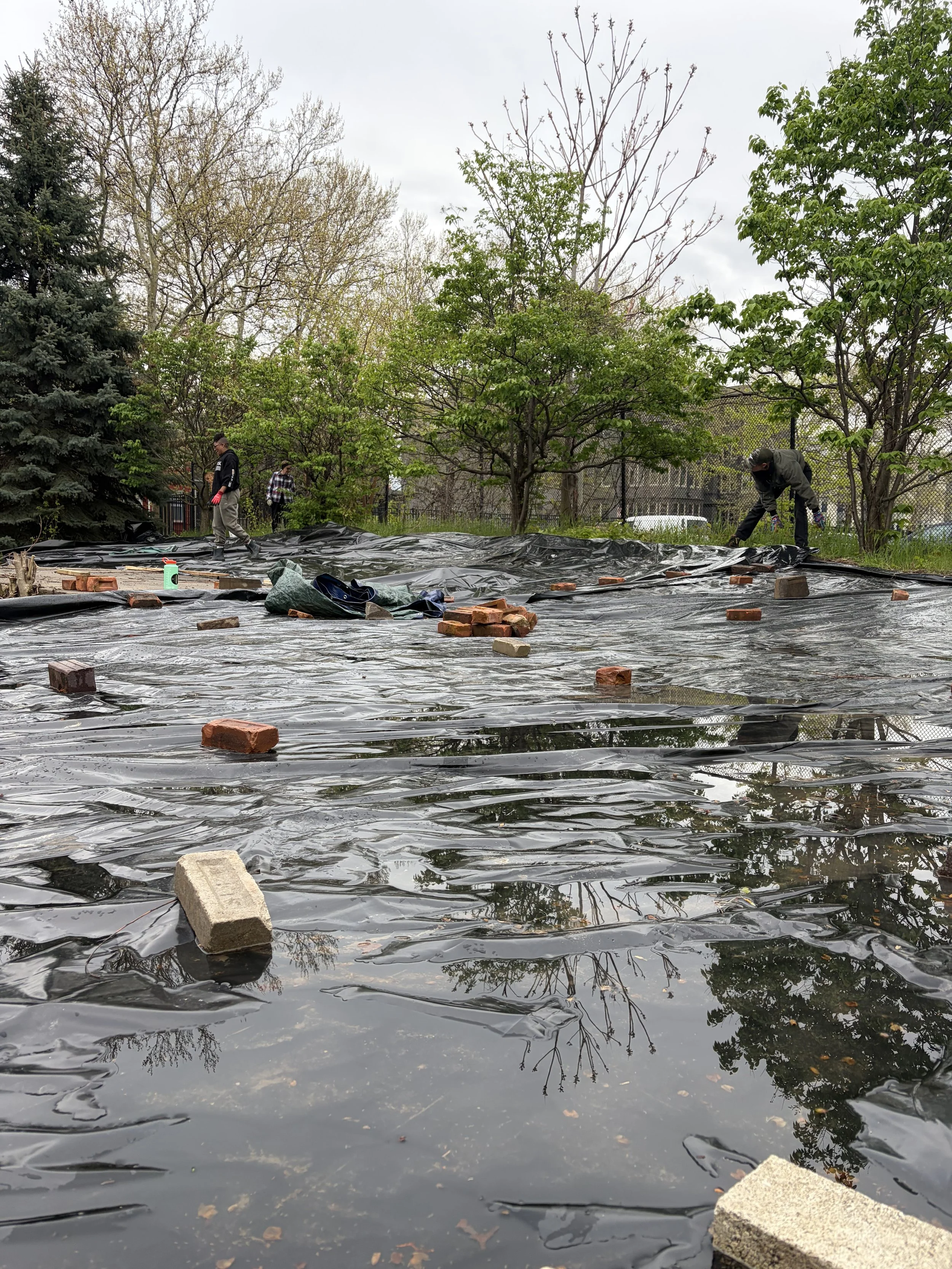
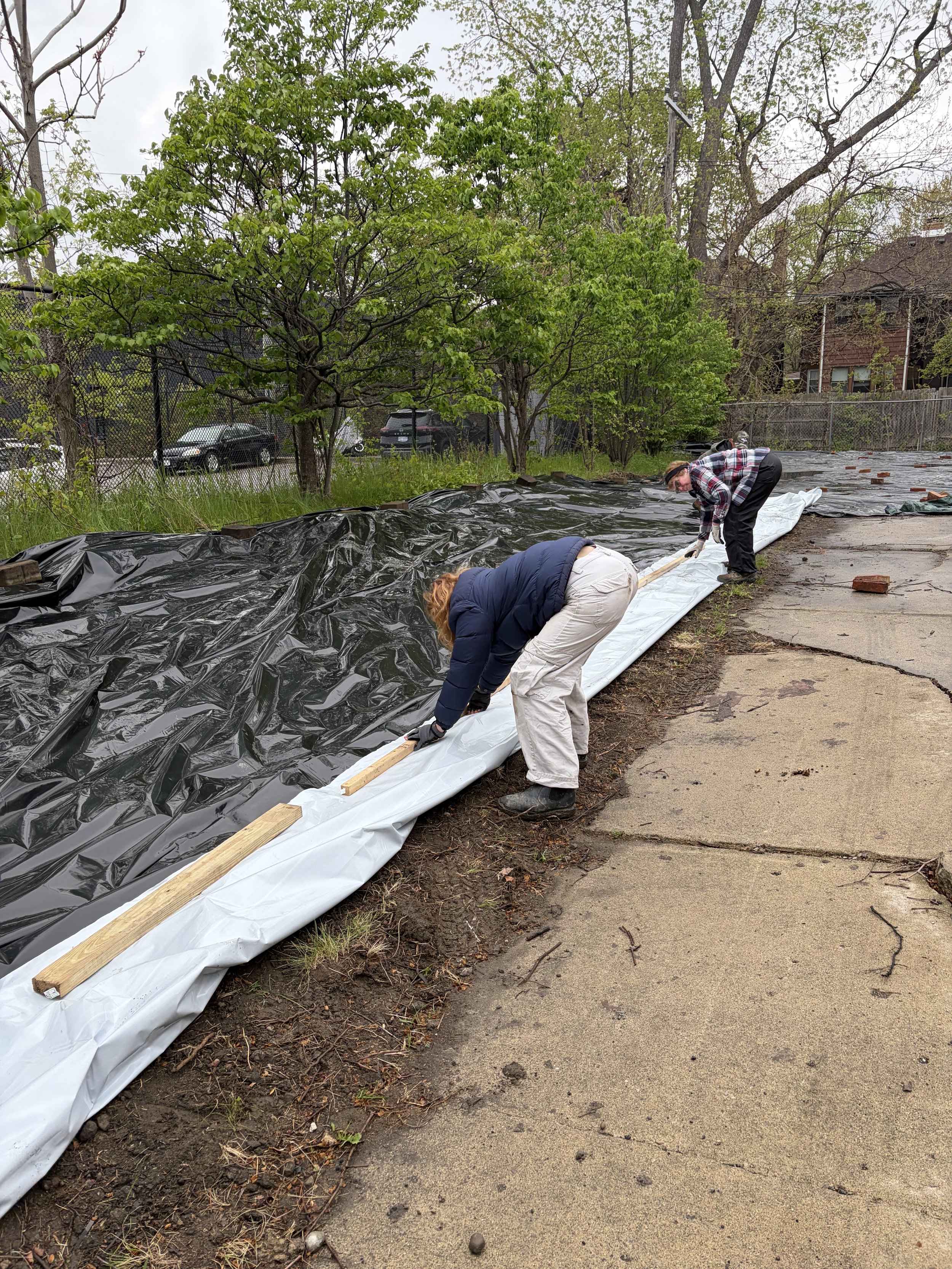
soil repair and remediation
plant-based material production
The garden is both functional and exploratory: a place where systems are built, observed, and adjusted through use over time.
Core Practices
EarthWorks is shaped by three overlapping practices:
Cultivation
Growing food, dye plants, and experimental species selected for their ecological and material properties.
Material Study
Transforming plant life into dyes, inks, fibers, and surfaces. Testing how color and material shift through season, weather, and process.
Ecological Infrastructure
Designing and testing small-scale systems for water, wind, and soil—built through hands-on iteration rather than fixed design.
A Year in EarthWorks
Spring — Preparation & Planting
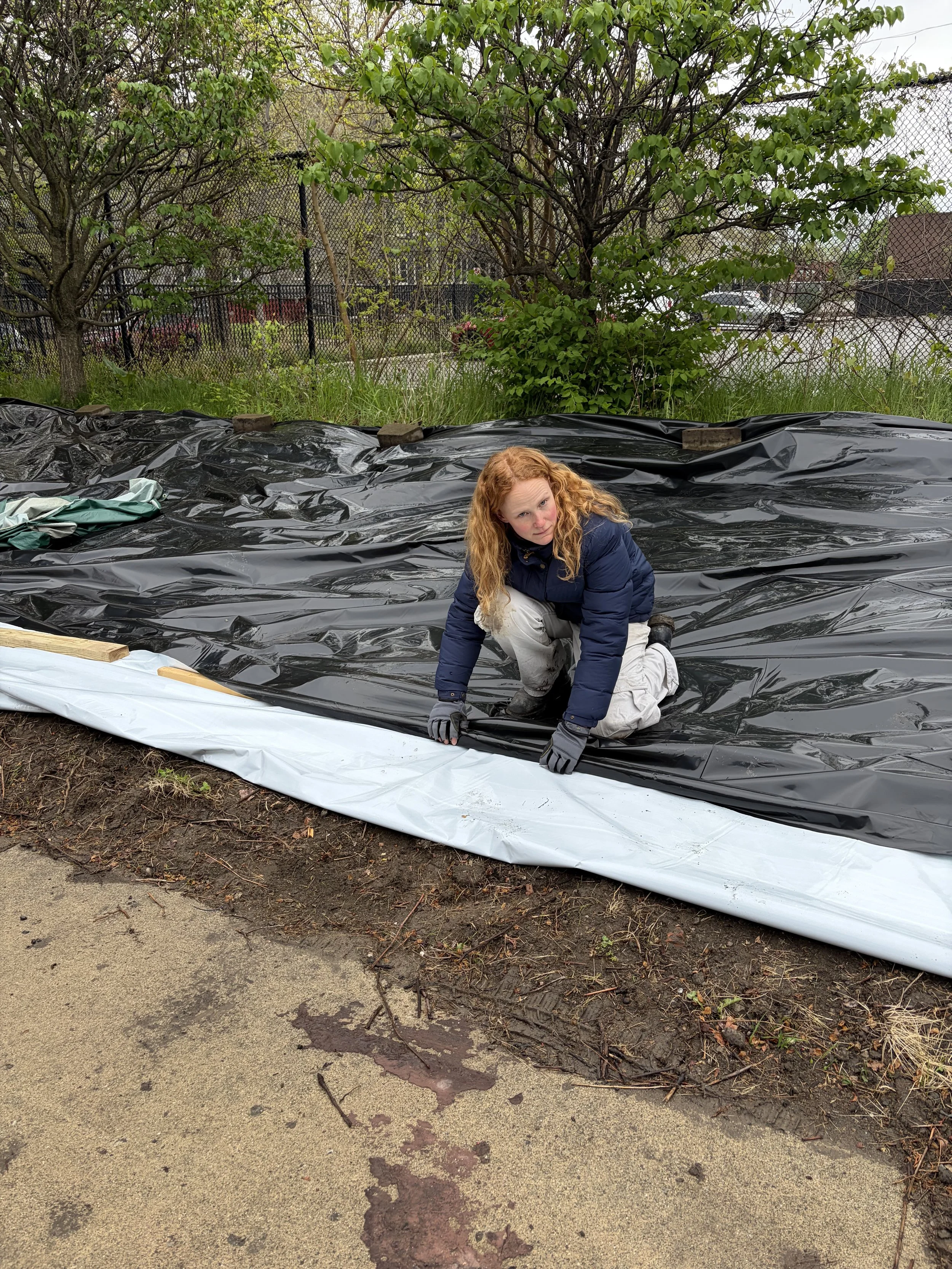
Soil restoration, bed preparation, and mapping water movement across the site. Early planting begins with dye plants, food crops, and experimental species. Rainwater systems are installed and tested.
Summer — Growth & Experimentation
The garden becomes active and collaborative. Systems are refined through use. Community gatherings, working sessions, and observation practices begin. Plants are studied as co-producers of material outcomes.
Late Summer — Harvest & Making
Materials are gathered and transformed. Plant matter becomes pigment, dye, fiber, and surface. This is a period of translation between living systems and material outputs.
Fall — Reflection & Return
Harvested materials are documented and shared. Workshops and gatherings reflect on what was learned. Seeds are saved, systems are assessed, and the site is prepared for seasonal rest.
A Living System
EarthWorks is not fixed. It changes through weather, season, and the people who engage with it.
It is a space for:
experimenting with ecological materials
building shared knowledge through practice
observing land-based systems over time
rethinking how infrastructure and care can be designed
The garden is understood as an ongoing conversation between land, materials, and community.
Soil Remediation